Virginia homebuyers face a crowded mortgage marketplace. Retail banks, online lenders, and credit unions all compete for your business with polished ads and rate teasers. But choosing the wrong lender can cost you thousands over the life of your loan, limit your program options, or leave you scrambling when your credit profile doesn’t fit a one-size-fits-all box.
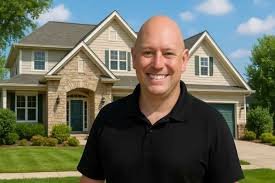
Old Dominion Mortgages operates as an independent wholesale mortgage broker statewide across Virginia — from Hampton Roads to the Shenandoah Valley, from the Fredericksburg corridor to Charlottesville and Roanoke. As an independent broker, Duane Buziak shops your loan across 500+ wholesale lenders simultaneously, something a retail bank structurally cannot do.
This article walks through eight concrete reasons why Virginia borrowers — first-time buyers, veterans, investors, self-employed professionals, and credit-challenged applicants — consistently choose Old Dominion Mortgages over retail alternatives. Each reason maps to a real structural advantage: rate access, program breadth, FICO flexibility, credit protection, and local Virginia expertise.
Whether you’re buying in Virginia Beach, financing in Henrico County, or refinancing in the Fredericksburg corridor, understanding these advantages helps you make a financially sound decision before you ever sign a purchase contract.
Duane Buziak, NMLS #1110647 | Coast2Coast Mortgage LLC, NMLS #376205
1. Wholesale Rate Access Across 500+ Lenders — Not Just One Shelf
The Challenge It Solves
When you walk into a retail bank or apply through an online lender, that institution quotes you from its own internal rate sheet. It has one shelf of products, one set of pricing, and no structural incentive to shop on your behalf. You get their best offer — not the market’s best offer. For a purchase as significant as a Virginia home loan, that distinction matters enormously.
The Strategy Explained
Old Dominion Mortgages operates as a wholesale broker, which means your loan file is submitted to a network of 500+ wholesale lenders simultaneously. Those lenders compete for your business, and the pricing they offer through the wholesale channel is structurally different from what they’d quote you directly at retail. The broker model creates genuine rate competition at the point of origination.
To put real math behind this: on a $400,000 Virginia home loan at a 30-year fixed term, a rate difference of just 0.25% translates to approximately $57 per month in payment savings. Over the full 30-year loan term, that single quarter-point difference accumulates to roughly $20,500 in total interest. A half-point difference doubles those figures. This is why rate access at the wholesale level is not a minor convenience — it is a financially material structural advantage.
Implementation Steps
1. Contact Old Dominion Mortgages before you contact any retail lender, so your first rate quote reflects wholesale market pricing rather than a single institution’s shelf rate.
2. Request a side-by-side rate comparison across multiple wholesale lender scenarios for your specific loan amount, credit profile, and property type.
3. Ask for the Annual Percentage Rate (APR) alongside the note rate on every scenario, so you’re comparing total cost of borrowing — not just the headline number.
Pro Tips
Even a borrower with excellent credit and a strong down payment leaves money on the table by going directly to a retail lender. The wholesale channel is not reserved for complex or credit-challenged files — it benefits every borrower. Rate shopping through a broker is the single highest-leverage financial action you can take before closing.
2. The NoTouch Credit Pull: Explore Rates Without Touching Your Score
The Challenge It Solves
Many Virginia borrowers hesitate to start the mortgage process because they’ve heard that lenders pull credit, and multiple hard inquiries can temporarily lower their FICO score. That concern is legitimate. A hard pull initiated by a lender shows up on your credit report and can affect your score, particularly if you’re shopping multiple lenders in a short window. The fear of credit damage leads some borrowers to commit to the first lender they contact rather than shopping properly.
The Strategy Explained
Old Dominion Mortgages uses a NoTouch Credit Pull — a soft credit pull mortgage approach that allows you to explore rates, programs, and payment scenarios without triggering a hard inquiry on your credit report. A soft credit pull mortgage consultation gives you real information about your loan options with no credit score impact. This is the definition of a no hard inquiry mortgage pre approval process: you get actionable data before you ever commit to a lender.
The Consumer Financial Protection Bureau distinguishes clearly between hard and soft inquiries. A soft pull does not appear to other lenders and does not affect your score. The NoTouch Credit Pull leverages this distinction so you can engage in a genuine mortgage pre approval without hard pull — protecting your credit profile throughout the shopping process.
Implementation Steps
1. Call 804-212-8663 or visit OldDominionMortgages.com and explicitly request the NoTouch Credit Pull consultation to begin your rate exploration.
2. Provide basic financial information — estimated income, approximate credit range, target purchase price — so Duane can identify the most relevant wholesale lender scenarios for your profile.
3. Review program options and payment scenarios before authorizing any hard pull, giving yourself a complete picture of what’s available before making a lender commitment.
Pro Tips
Using a soft pull mortgage broker approach means you can shop thoroughly without penalty. Think of it as test-driving multiple vehicles before signing any paperwork. A no credit hit mortgage application consultation is not a second-tier service — it is the intelligent starting point for any Virginia homebuyer who wants maximum information before maximum commitment.
3. VA Loans Down to a 500 FICO Score — Where Retail Lenders Stop
The Challenge It Solves
Virginia is home to a substantial active-duty and veteran population, particularly in Hampton Roads, Northern Virginia, and the Fredericksburg corridor. Many of these borrowers have served honorably and earned their VA loan benefit — but carry credit scores below 620 due to medical debt, deployment-related financial disruptions, or past hardship. Retail lenders routinely turn these borrowers away, not because the VA requires it, but because the retail lender imposes its own internal overlays.
The Strategy Explained
The Department of Veterans Affairs does not set a minimum credit score for VA loan eligibility. The minimum is a lender-imposed construct. Most retail lenders set their VA FICO floor at 620 or 640 because they underwrite to their own risk tolerance, not the VA’s guidelines. Old Dominion Mortgages accesses wholesale lenders that accommodate Virginia veterans and active-duty service members down to a 500 FICO score, provided compensating factors are present — such as residual income, stable employment history, or low debt-to-income ratios.
This is a structural difference, not a marketing claim. Rocket Mortgage and Movement Mortgage underwrite VA loans to their own internal overlays. An independent broker accesses lenders whose overlays are more flexible, opening the VA benefit to veterans who have been incorrectly told they don’t qualify.
Implementation Steps
1. Confirm your VA eligibility by obtaining your Certificate of Eligibility through the VA portal or by having Old Dominion Mortgages pull it on your behalf during the consultation.
2. Request a 500-580 FICO VA loan scenario specifically — do not accept a generic “you don’t qualify” response from any lender without exploring the wholesale channel first.
3. Gather compensating factor documentation: 12 months of on-time rent or housing payment history, evidence of stable employment, and a current debt summary to strengthen your file.
Pro Tips
If a retail lender has told a Virginia veteran they don’t qualify for a VA loan due to credit score, that answer reflects that lender’s overlay — not the VA’s guidelines. The NoTouch Credit Pull is the right first step: get a soft pull assessment of your actual credit profile before assuming any lender’s rejection is final.
4. Every Loan Type Under One Roof: FHA, USDA, Jumbo, Non-QM, DSCR, and DPA
The Challenge It Solves
Most retail lenders offer a standard menu: conventional, FHA, VA, and maybe a jumbo product. If your situation calls for something outside that box — rural property, investment income, down payment assistance, or a loan amount above the conforming limit — you’re often told to look elsewhere. That means starting the process over with a new lender, new disclosures, and more time lost.
The Strategy Explained
Old Dominion Mortgages offers the full program menu under one licensed broker. Here’s what that looks like in practice across Virginia:
USDA Zero-Down Loans: Available in eligible rural Virginia counties including Caroline County, Louisa County, portions of the Fredericksburg corridor, and Shenandoah Valley areas. Eligible properties can be confirmed through the USDA property eligibility map. Zero down payment required for qualifying borrowers in qualifying areas.
FHA Loans: HUD FHA guidelines allow down payments as low as 3.5% with a 580 FICO score. Old Dominion Mortgages accesses wholesale FHA pricing, which is structurally more competitive than retail FHA pricing.
Jumbo Loans: The 2026 FHFA conforming loan limit is $806,500 for standard Virginia counties and $1,249,125 for high-cost areas. Loan amounts above these thresholds require jumbo financing — a product Old Dominion Mortgages sources through its wholesale lender network.
Down Payment Assistance (DPA): Programs including Dynamo DPA and Turbo DPA are available for qualifying first-time buyers. VHDA also administers Virginia-specific DPA programs with income and purchase price limits by region.
Non-QM and DSCR: Covered in detail in Section 6 — these programs serve self-employed borrowers and real estate investors who don’t fit conventional underwriting.
Implementation Steps
1. Identify your borrower profile before your first consultation: first-time buyer, veteran, self-employed, investor, or move-up buyer — each maps to a different primary program.
2. Ask specifically about DPA program eligibility if your down payment savings are limited; many Virginia buyers qualify for assistance they’re unaware of.
3. Confirm property address eligibility for USDA if you’re purchasing in a rural or semi-rural Virginia county — the eligibility map is the definitive source.
Pro Tips
Having all programs under one roof means your broker can pivot if your first-choice program hits a snag. A borrower who starts as a conventional candidate might qualify for a better rate through FHA, or discover USDA eligibility they hadn’t considered. That flexibility is only possible when your lender isn’t limited to a single product shelf.
5. Transparent Pricing vs. the Lender Credit Marketing Angle
The Challenge It Solves
Some Virginia lenders market a lender credit model that appears to eliminate closing costs. The appeal is real: closing costs are a significant cash requirement, and anything that reduces that burden at the table is worth understanding. The problem arises when the rate/cost tradeoff embedded in that model isn’t clearly disclosed, leaving borrowers to compare a “no closing cost” offer against a standard offer without understanding what they’re actually trading.
The Strategy Explained
A lender credit works by raising your note rate above the market rate. The lender then credits a portion of that rate premium back to you at closing, offsetting your closing costs. It is a legitimate financial tool — but it is a tradeoff, not a savings. You pay less upfront and more over time, in the form of a higher monthly payment and higher total interest over the life of the loan.
Old Dominion Mortgages presents the lender credit option transparently, alongside wholesale pricing alternatives, so you can make an informed rate/cost tradeoff decision. For a borrower who plans to sell or refinance within five years, a lender credit structure may make financial sense. For a borrower planning to hold the loan for 20 or 30 years, the math often favors paying closing costs upfront and securing the lower rate. The right answer depends on your specific situation — and you deserve to see both scenarios with real numbers before you decide.
Implementation Steps
1. Request a break-even analysis on any lender credit scenario: how many months of lower-cost payments does it take to recoup the closing costs you paid upfront versus the lender credit alternative?
2. Ask for the note rate, APR, and total interest paid over your expected hold period for both scenarios side by side.
3. Make your decision based on your actual plan for the property — not on which option sounds better in a headline.
Pro Tips
Transparency is the operating principle here. Old Dominion Mortgages will show you the lender credit option if it fits your situation — and will also show you the wholesale rate alternative so you can compare honestly. An informed borrower makes a better long-term financial decision, and that outcome serves everyone.
6. Bank Statement and DSCR Loans for Virginia’s Self-Employed and Investors
The Challenge It Solves
W-2-only underwriting excludes a significant and growing segment of Virginia borrowers. Business owners, freelancers, independent contractors, and real estate investors often show reduced taxable income on their returns — precisely because they’re running their finances efficiently. Conventional underwriting reads that reduced income as a qualification problem, even when the borrower’s actual cash flow is strong. The result: creditworthy Virginians are denied loans they can comfortably afford.
The Strategy Explained
Bank Statement Loans: Instead of tax returns, income is calculated from 12 or 24 months of business or personal bank deposits. A self-employed borrower who shows $60,000 in taxable income on their Schedule C but deposits $180,000 annually into their business account can qualify based on the deposit history — not the tax return. Old Dominion Mortgages accesses wholesale Non-QM lenders that underwrite bank statement loans with competitive rates and reasonable terms.
DSCR Loans (Debt Service Coverage Ratio): For real estate investors, personal income is removed from the qualification equation entirely. The loan qualifies based on the rental property’s ability to cover its own debt service. A DSCR of 1.0 means the property’s rental income exactly covers the mortgage payment. Many wholesale lenders will approve DSCR loans at 1.0 or above, with some accommodating ratios slightly below 1.0 for strong-profile borrowers. This opens investment property financing to Virginia landlords and portfolio builders who don’t want their personal income scrutinized for each acquisition.
Implementation Steps
1. Gather 12-24 months of bank statements — business account preferred for self-employed borrowers — and calculate your average monthly deposits before your consultation.
2. For DSCR loan candidates, obtain a current lease agreement or market rent analysis for the subject property, as this is the primary income document for underwriting.
3. Confirm with Old Dominion Mortgages which Non-QM wholesale lenders are currently most competitive for your specific profile — bank statement and DSCR pricing varies meaningfully across lenders.
Pro Tips
DSCR loans do not require employment verification, tax returns, or personal income documentation. For a Virginia investor building a rental portfolio, this is a structurally faster and simpler path to financing than conventional loans. Bank statement borrowers should avoid large irregular deposits in the 12 months before application, as underwriters will scrutinize deposit consistency.
7. Statewide Virginia Expertise Across Every Regional Market
The Challenge It Solves
National online lenders process Virginia files the same way they process files in Arizona or Ohio. They don’t know that the Fredericksburg corridor has distinct pricing dynamics compared to Hampton Roads, or that rural Shenandoah Valley counties have USDA eligibility that suburban Northern Virginia does not. Generic lender knowledge produces generic outcomes — and Virginia’s regional market diversity rewards local expertise.
The Strategy Explained
Old Dominion Mortgages holds statewide Virginia licensing and operates with deep knowledge of regional market conditions across the commonwealth. That means Richmond metro buyers, Hampton Roads purchasers, Northern Virginia move-up buyers, Charlottesville homebuyers, Roanoke families, and Fredericksburg corridor borrowers all receive counsel that reflects their actual local market — not a national average.
According to Virginia REALTORS market research, median home prices vary substantially across Virginia’s regions, with Northern Virginia and the DC suburbs commanding significantly higher price points than Southside Virginia or the Shenandoah Valley. That regional price variation affects loan program selection, conforming limit applicability, DPA eligibility thresholds, and USDA eligibility — all of which require lender-side knowledge to navigate correctly.
Understanding which Virginia counties qualify for USDA, which markets are pushing toward the $806,500 conforming ceiling, and where jumbo financing becomes necessary — that’s the kind of statewide contextual knowledge that a national call center cannot replicate.
Implementation Steps
1. Tell Old Dominion Mortgages the specific Virginia county or city where you’re purchasing — regional market knowledge shapes program recommendations from the first conversation.
2. Ask about USDA eligibility specifically if your target property is in a rural or semi-rural Virginia county; eligibility boundaries are not always intuitive.
3. Confirm whether your target purchase price approaches the $806,500 conforming limit, as crossing that threshold shifts you into jumbo territory with different pricing and underwriting requirements.
Pro Tips
Virginia’s market diversity is an asset for buyers who work with a broker who understands it. A borrower targeting a property in Caroline County may have USDA zero-down access that a borrower in Fairfax County does not. Statewide expertise means your broker identifies those opportunities proactively rather than waiting for you to ask.
8. One Licensed Broker, Accountable from Application to Closing
The Challenge It Solves
Retail call center lending is a handoff model. You speak with a loan officer who takes your application, then your file moves to a processor, then to an underwriter, then to a closing coordinator. At each stage, you’re speaking with someone new who is reading your file for the first time. Questions get lost. Conditions take longer to clear. Closing delays happen because no single person owns the outcome from start to finish.
The Strategy Explained
Duane Buziak, NMLS #1110647, is the named, licensed broker on every file originated through Old Dominion Mortgages. He is reachable directly at 804-212-8663 from your first inquiry through your closing day. There is no call center, no routing queue, and no handoff to a processor who doesn’t know your name. When your file hits a condition, Duane resolves it. When your rate lock is expiring, Duane manages it. When your closing date approaches and the title company needs a document, Duane coordinates it.
This is not a customer service feature — it is a structural accountability model. Single-point-of-contact lending produces faster condition clearance, fewer closing delays, and a borrower experience that feels like working with a professional who is invested in your outcome, because they are.
Implementation Steps
1. Save 804-212-8663 in your phone from your first consultation — this is the direct line to your broker, not a call center queue.
2. Communicate any changes to your financial situation, employment, or purchase timeline directly and promptly; your broker needs real-time information to manage your file effectively.
3. Start with a no credit hit mortgage application consultation — no commitment, no hard pull, no risk to your score. Use that first conversation to assess whether Old Dominion Mortgages is the right fit before you move forward.
Pro Tips
Ask any lender you’re considering: “Who is my single point of contact from application to closing, and what is their direct phone number?” If the answer is a department name or a general number, you’re entering a handoff model. Accountability in mortgage lending is not a given — it’s a choice, and it’s worth choosing deliberately.
Broker vs. Retail Lender: Side-by-Side Comparison
| Feature | Old Dominion Mortgages (Broker) | Rocket Mortgage (Retail) | CapCenter (Retail) | Movement Mortgage (Retail) |
|---|---|---|---|---|
| Rate Source | 500+ wholesale lenders competing | Single retail shelf | Single retail shelf | Single retail shelf |
| Lender Options | 500+ wholesale lenders | One institution | One institution | One institution |
| FICO Floor (VA Loans) | 500 FICO (wholesale lender dependent) | Typically 620+ overlay | Varies by internal overlay | Typically 620+ overlay |
| Program Access | FHA, VA, USDA, Conventional, Jumbo, Non-QM, DSCR, DPA | Standard agency products | Standard agency products | Standard agency products |
| Closing Cost Transparency | Full rate/cost tradeoff disclosure | Standard disclosure | Lender credit model marketed prominently | Standard disclosure |
| Single Point of Contact | Yes — Duane Buziak, direct line | Call center routing | Call center routing | Call center routing |
| Soft Pull Pre-Approval | Yes — NoTouch Credit Pull available | Typically hard pull required | Varies | Typically hard pull required |
Frequently Asked Questions
What is an independent mortgage broker and how is it different from a bank?
An independent mortgage broker submits your loan to multiple wholesale lenders who compete for your business, while a bank or retail lender offers only its own internal products. Brokers access wholesale pricing channels that are not available to consumers directly, which typically produces more competitive rates and broader program access than a single retail institution can offer.
Can I get a VA loan with a 500 FICO score in Virginia?
Yes — Old Dominion Mortgages accesses wholesale lenders that accommodate VA loans down to a 500 FICO score for qualifying Virginia veterans and active-duty service members. The VA itself does not set a minimum credit score; the 620-640 floor commonly cited by retail lenders is an internal overlay, not a VA requirement, as confirmed by the VA’s eligibility guidelines.
What is the NoTouch Credit Pull and does it affect my credit score?
The NoTouch Credit Pull is a soft credit pull mortgage process used by Old Dominion Mortgages that allows borrowers to explore rates and programs without triggering a hard inquiry on their credit report. A soft pull does not appear to other lenders and does not affect your FICO score, making it a true no credit hit mortgage application starting point.
What is the 2026 conforming loan limit in Virginia?
The 2026 conforming loan limit is $806,500 for standard Virginia counties and $1,249,125 for designated high-cost areas, as published by the Federal Housing Finance Agency. Loan amounts above these thresholds require jumbo financing, which Old Dominion Mortgages sources through its wholesale lender network.
Does Old Dominion Mortgages offer USDA zero-down loans in Virginia?
Yes — USDA zero-down loans are available in eligible rural Virginia counties including Caroline County, Louisa County, portions of the Fredericksburg corridor, and Shenandoah Valley areas. Property eligibility can be confirmed through the USDA eligibility map. Borrowers must also meet income limits for their county.
How does a bank statement loan work for self-employed borrowers?
A bank statement loan calculates qualifying income from 12 or 24 months of business or personal bank deposits rather than tax returns, allowing self-employed Virginia borrowers to qualify based on actual cash flow rather than reduced taxable income. Old Dominion Mortgages accesses wholesale Non-QM lenders that underwrite bank statement loans with competitive terms.
What is a DSCR loan and who qualifies in Virginia?
A DSCR (Debt Service Coverage Ratio) loan qualifies based on a rental property’s ability to cover its own mortgage payment rather than the borrower’s personal income, making it ideal for Virginia real estate investors who want to finance investment properties without providing personal income documentation. A DSCR of 1.0 or above — meaning the rent covers the mortgage — typically meets the baseline qualification threshold.
How do I start a mortgage pre-approval without a hard inquiry?
Call Old Dominion Mortgages at 804-212-8663 or visit OldDominionMortgages.com and request the NoTouch Credit Pull consultation. This mortgage pre approval without hard pull process allows you to review rate scenarios and program options using a soft pull that does not affect your credit score, giving you full information before you authorize any hard inquiry.
Your Implementation Roadmap: Which Advantage Fits Your Profile
Eight reasons, eight structural advantages — but not every advantage is equally relevant to every borrower. Here’s how to prioritize based on your situation.
Veterans and active-duty service members: Start with Section 3. If your FICO is below 620, the wholesale VA loan access at Old Dominion Mortgages may be the difference between qualifying and being turned away. Use the NoTouch Credit Pull to assess your actual credit profile first.
Self-employed borrowers and investors: Section 6 is your primary advantage. Bank statement loans and DSCR financing open doors that conventional underwriting closes. Bring 12-24 months of bank statements and any current lease agreements to your first consultation.
First-time buyers: Section 4 maps your DPA program options, and Section 2 explains why starting with the NoTouch Credit Pull protects your score while you explore. Many Virginia first-time buyers qualify for down payment assistance programs they’ve never heard of.
Rate-focused buyers: Section 1 makes the wholesale rate access case with real math. On a $400,000 Virginia loan, the difference between retail and wholesale pricing is not cosmetic — it’s thousands of dollars over the life of the loan.
All borrowers: Sections 7 and 8 apply universally. Statewide Virginia expertise and single-point-of-contact accountability improve every loan experience regardless of program type.
The right starting point for any Virginia borrower is a soft credit pull mortgage consultation with no commitment and no risk to your credit score. Start your mortgage application today and find out exactly which of these advantages applies to your situation. Call 804-212-8663 or visit OldDominionMortgages.com to begin.