Picture this: you’re a Virginia homebuyer sitting at your kitchen table, three browser tabs open, comparing rate quotes from different lenders. One shows 6.875%. Another shows 7.125%. A third is advertising something about “no fees.” You’re not sure if you’re looking at the same type of loan, whether those rates include points, or what any of this will actually cost you at the closing table. Sound familiar?
This is where most buyers get stuck. They focus on the number on the screen without understanding the structure behind it. And that structural gap — the difference between how lenders are built, what programs they can access, and how they treat your credit — is where thousands of dollars are quietly won or lost.
Not all mortgage and lending services are created equal. Some lenders have one product shelf and one set of rates. Others, like independent wholesale brokers, shop your loan across hundreds of wholesale lenders to find the most competitive fit for your specific situation. Knowing which mortgage and lending services features to look for before you start comparing quotes is the difference between a good deal and the best deal available to you in Virginia’s market.
This guide gives you a clear, practical framework for evaluating mortgage and lending services features — from lender structure and credit pull policies to program depth, fee transparency, and closing timelines. Whether you’re buying in Northern Virginia, Richmond, Hampton Roads, Charlottesville, or anywhere across the Commonwealth, the same evaluation principles apply.
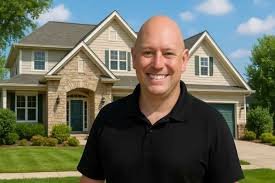
Duane Buziak, NMLS #1110647 | Coast2Coast Mortgage LLC, NMLS #376205
Why Lender Structure Matters More Than the Rate on the Screen
Before you compare a single rate quote, you need to understand who you’re actually talking to. There are two fundamentally different types of mortgage providers: retail lenders and independent wholesale brokers. This distinction is the single most important mortgage and lending services feature to evaluate, and most buyers never ask about it.
A retail lender — whether it’s a bank, credit union, or direct-to-consumer platform — originates loans using its own funds and its own rate sheet. You get access to their products, their pricing, and their guidelines. If your situation doesn’t fit their box, you’re out of options with that lender.
An independent wholesale mortgage broker operates differently. Rather than holding one product shelf, a broker like Old Dominion Mortgages has relationships with 500+ wholesale lenders and shops your specific loan scenario across that network to find the most competitive pricing and program fit. The broker works for you, not for a single lender’s bottom line. Understanding the difference between a mortgage broker and a bank is one of the most valuable things a Virginia buyer can do before applying.
This structural difference becomes especially significant at key loan thresholds. The 2026 FHFA conforming loan limit is $806,500 for most of Virginia, with a high-cost ceiling of $1,249,125 in designated high-cost areas. Loans at or below the baseline qualify for conforming pricing — typically the most favorable rates available. Loans above that threshold enter jumbo territory, where pricing and guidelines vary significantly by lender.
Here’s where lender structure creates real money differences. Consider a Virginia buyer purchasing a $750,000 home with 10% down. The loan amount is $675,000 — comfortably under the $806,500 conforming baseline, which means this loan qualifies for conforming pricing. Now watch what a quarter-point rate difference does over time.
Rate Scenario A (Retail Lender, 7.00% on 30-year fixed): Monthly principal and interest payment is approximately $4,491.
Rate Scenario B (Wholesale Broker Pricing, 6.75% on 30-year fixed): Monthly principal and interest payment is approximately $4,377.
Monthly difference: approximately $114. Over 30 years, that gap compounds to approximately $41,040 in additional interest paid. These are illustrative scenarios — actual rates change daily — but the math illustrates why wholesale access matters structurally, not just theoretically.
The rate on the screen only tells you part of the story. The structure behind who’s setting that rate tells you the rest.
The Credit Check Question Every Buyer Should Ask First
Before any lender pulls your credit, ask this: will this be a hard inquiry or a soft pull? Most buyers don’t know to ask. Most lenders don’t volunteer the answer. And the difference matters more than you might expect.
A hard credit inquiry occurs when a lender requests your full credit file as part of a formal application. Hard inquiries are visible to other creditors and can lower your FICO score. If you’re shopping multiple lenders simultaneously and each one pulls a hard inquiry, you could see your score drop at exactly the moment you need it to be highest — right before underwriting.
A soft credit pull mortgage approach changes this dynamic entirely. A soft pull allows a lender to review enough of your credit profile to assess your loan scenario and provide meaningful rate guidance — without triggering the score impact of a hard inquiry. This is the foundation of what Old Dominion Mortgages calls the NoTouch Credit Pull: a proprietary approach that lets Virginia buyers explore their options, get pre-qualification guidance, and compare loan scenarios without a no credit hit mortgage application damaging the very score they’re trying to protect. The full mechanics of this process are covered in our soft pull mortgage pre-approval guide.
The no hard inquiry mortgage pre approval model matters especially when you’re early in your search. You might be six months from making an offer. You want to understand what you qualify for, what rate range you’re looking at, and what, if anything, you should do to strengthen your profile before you apply in earnest. A mortgage pre approval without hard pull lets you do exactly that — gather real information without real consequences to your credit.
It’s worth noting that FICO scoring models do treat multiple mortgage-related hard inquiries within a defined shopping window as a single inquiry for scoring purposes. But that window only applies after you’ve committed to shopping — not during the exploratory phase where a soft pull mortgage broker approach gives you a genuine advantage.
FICO floor flexibility is another feature in this category that buyers frequently overlook. Not all lenders can serve all credit profiles. Old Dominion Mortgages accepts down to 500 FICO on VA loans — a threshold many retail lenders won’t touch. FHA guidelines allow 3.5% down at 580+ FICO and 10% down at 500-579 FICO, per HUD guidelines. If a retail lender has overlays (internal credit minimums above the program floor), they may turn away a borrower who is technically eligible. A broker with genuine program depth doesn’t have that limitation.
Ask every lender upfront: what is your minimum FICO by program, and will your initial review require a hard inquiry? The answers will tell you a great deal about how that lender is structured to serve you.
Program Depth: The Feature Most Buyers Forget to Ask About
Rate and credit pull policy get most of the attention. Program depth is the feature that quietly determines whether you can get a mortgage at all — and on what terms.
Program depth refers to the full range of loan types a lender can actually originate and deliver. It’s not enough for a lender to have heard of a program. They need to have active wholesale relationships, current guidelines, and the operational capacity to close it. Here’s what a genuinely full program shelf looks like:
FHA Loans: Government-backed, lower down payment requirements, accessible FICO floors. Widely available but with specific mortgage insurance premium structures buyers should understand. Buyers who want a detailed walkthrough of eligibility requirements should review our guide on how to qualify for FHA loan approval.
VA Loans: No down payment required for eligible veterans and active-duty service members. Old Dominion Mortgages accepts VA loans down to 500 FICO — a meaningful differentiator for veterans who’ve had credit challenges.
USDA Rural Development: Zero down payment in eligible rural Virginia areas. Eligibility is property-address specific — a home just outside a qualifying boundary doesn’t qualify, while one a mile away might. Buyers in rural corridors across Virginia should always check USDA eligibility before assuming they need a conventional down payment.
Conventional Loans: Conforming and jumbo, with pricing that rewards stronger credit profiles and larger down payments.
Non-QM, Bank Statement, and DSCR Loans: Critical for self-employed borrowers, real estate investors, and anyone whose income doesn’t fit a traditional W-2 documentation model. These programs are largely inaccessible through single-shelf retail lenders and require wholesale channel relationships to access competitively.
Down Payment Assistance (DPA): Programs like Dynamo DPA and Turbo DPA can make homeownership achievable for buyers who have the income to sustain a mortgage but haven’t accumulated a full down payment. DPA availability and terms change — confirm current program status directly with Duane Buziak at 804-212-8663.
Virginia’s housing market creates real geographic variation in program relevance. According to Virginia REALTORS’ market research, statewide median home prices have risen substantially in recent years, creating affordability pressure across multiple Virginia markets. Buyers in Fredericksburg, Hampton Roads, Charlottesville, and the Roanoke corridor face different price points and different program eligibility landscapes. USDA eligibility, DPA thresholds, and conforming loan limits all interact with local price levels in ways that make program depth a genuinely consequential feature — not a checkbox. For a broader look at how these trends affect buyers, see our overview of housing affordability trends in Virginia.
A single-shelf lender can only offer what’s on their shelf. A broker with 500+ wholesale lender relationships can find the program that actually fits your situation, your geography, and your financial profile.
Fees, Lender Credits, and What “No Closing Cost” Claims Really Mean
Fee transparency is one of the most important mortgage and lending services features to evaluate, and it’s also one of the most frequently obscured. Let’s break down the components clearly.
Origination fees are charges the lender imposes for processing and underwriting your loan. They may be flat dollar amounts or expressed as a percentage of the loan amount.
Discount points are prepaid interest — you pay upfront to buy down your interest rate. One point equals 1% of the loan amount. Whether points make sense depends on how long you plan to hold the loan. Our dedicated resource on whether mortgage points are worth it walks through the break-even math in detail.
Lender credits work in the opposite direction: the lender offers you a credit toward closing costs in exchange for accepting a slightly higher interest rate. This is the mechanism behind “no closing cost” or “no lender fee” marketing claims. The costs don’t disappear — they’re absorbed into the rate, which means you pay them over time through higher monthly payments rather than upfront.
This matters when evaluating competitors. Some Virginia lenders market aggressively around fee-free or no-closing-cost structures. The honest answer is that wholesale pricing through an independent broker can frequently deliver a lower rate and lower fees than a retail “no-fee” offer — because the wholesale pricing advantage offsets the fee structure before any credits are applied. The CFPB requires lenders to provide a Loan Estimate within 3 business days of application, which gives you a standardized document to compare actual costs across lenders on equal footing.
The comparison table below captures the structural differences between Old Dominion Mortgages and several other lenders Virginia buyers commonly encounter:
| Feature | Old Dominion Mortgages (Duane Buziak) | Rocket Mortgage | CapCenter | Movement Mortgage |
|---|---|---|---|---|
| Rate Access | 500+ wholesale lenders, competitive rate shopping | Single retail shelf, proprietary rates | Single retail shelf, proprietary rates | Single retail shelf, proprietary rates |
| Lender Fees Structure | Wholesale pricing; transparent origination; no hidden markups | Retail origination fees apply | Markets “no lender fee”; lender credits priced into rate | Retail origination fees apply |
| Program Access | FHA, VA, USDA, Conventional, Jumbo, Non-QM, DSCR, Bank Statement, DPA | FHA, VA, Conventional, Jumbo; limited Non-QM | Conventional, FHA, VA; limited specialty programs | FHA, VA, Conventional; limited Non-QM access |
| FICO Floor | 500 (VA loans); program-dependent minimums | Typically 620+ for most programs | Typically 620+ for most programs | Typically 620+ for most programs |
| Credit Pull Approach | NoTouch Credit Pull (soft pull available for pre-qualification) | Hard inquiry required for pre-approval | Hard inquiry required for pre-approval | Hard inquiry required for pre-approval |
Fee transparency starts with asking the right questions and reading the Loan Estimate carefully. A lender who resists providing a Loan Estimate early in the process is a lender worth approaching with caution.
Speed, Communication, and the Service Features That Protect Your Contract
In Virginia’s competitive markets, a slow lender isn’t just inconvenient. It can cost you the home.
Northern Virginia, the Richmond metro, and Hampton Roads regularly see multiple-offer situations where sellers evaluate not just price but the strength and speed of the buyer’s financing. A pre-approval letter from a lender known for slow processing or unclear communication carries less weight than one from a lender with a track record of closing on time. This is a service feature with direct financial consequences. Buyers who want to understand what a realistic timeline looks like should review our guide to the mortgage pre-approval timeline.
When evaluating a lender’s communication structure, consider these distinctions:
Dedicated loan officer vs. call center model: A dedicated loan officer knows your file, answers your calls, and can escalate issues directly. A call center model routes you to whoever is available, which means re-explaining your situation every time and losing continuity when decisions need to be made quickly.
Local market knowledge vs. national platform: A lender with Virginia-specific experience understands local appraisal dynamics, title company relationships, and the pace of specific markets. A national platform may process Virginia loans the same way it processes loans in any other state — without the local context that smooths complications.
Direct wholesale escalation: Independent brokers can escalate directly with their wholesale lender contacts when an underwriting condition needs resolution. This can compress timelines meaningfully when a contract’s closing date is approaching.
The Loan Estimate is also a service-quality tool, not just a cost-comparison document. When you receive Loan Estimates from multiple lenders within the same 3-business-day window after application, you’re comparing standardized disclosures on equal terms — same loan amount, same property, same date. This is the only true apples-to-apples comparison available to you. If you want a side-by-side look at how Old Dominion Mortgages stacks up against a major retail competitor, see our Old Dominion Mortgage vs. Rocket Mortgage comparison. The soft pull advantage connects here: because Old Dominion Mortgages can provide meaningful pre-qualification guidance before a hard inquiry, you enter the formal application phase with more information and more confidence about where your loan is likely to land.
Ask any lender you’re considering: what is your average time from application to clear-to-close? Who will be my point of contact throughout the process? How do you handle underwriting conditions that arise close to closing? The answers reveal the service infrastructure behind the rate quote.
8 Questions Virginia Buyers Should Ask Any Mortgage Lender
1. Can I get a mortgage pre-approval without a hard credit pull?
Yes, with the right lender. Old Dominion Mortgages offers the NoTouch Credit Pull, which allows buyers to receive pre-qualification guidance and rate scenarios through a soft credit pull mortgage process — no score impact until you’re ready to move forward formally. This is a no credit hit mortgage application approach designed to protect your FICO while you explore your options.
2. What is the minimum credit score required for the loan programs I’m considering?
It depends on the program and the lender’s internal overlays. FHA guidelines permit 580+ FICO for 3.5% down and 500-579 FICO for 10% down, per HUD. VA loans at Old Dominion Mortgages are available down to 500 FICO. Many retail lenders impose overlays above program minimums, effectively turning away eligible borrowers. Always ask for the lender’s actual minimum by program, not just the program’s published floor.
3. What loan programs can you actually originate and close — not just refer out?
This question separates brokers with genuine program depth from lenders with a limited shelf. A full-service wholesale broker should be able to originate FHA, VA, USDA, Conventional, Jumbo, Non-QM, DSCR, bank statement, and DPA loans in-house. If a lender hesitates or says they “work with partners” on certain programs, you may be dealing with a referral arrangement rather than direct access.
4. How are your lender credits structured, and what does “no fee” actually mean for my rate?
Lender credits reduce upfront closing costs by pricing a slightly higher rate into your loan. There’s nothing inherently wrong with this structure, but buyers should understand the trade-off. Ask any lender to show you the rate with and without lender credits, so you can evaluate the true cost. Wholesale pricing can often deliver a lower rate and lower fees than retail “no-fee” offers — but only if you ask to see the comparison.
5. Am I eligible for USDA zero-down financing or Down Payment Assistance in my target area?
USDA Rural Development eligibility is property-address specific across Virginia. DPA programs like Dynamo DPA and Turbo DPA have their own income and purchase price parameters. A lender without wholesale access to these programs simply cannot help you with them. Ask specifically whether the lender has active USDA and DPA capabilities — and verify they’ve closed these loans recently, not just that they appear on a program list.
6. What rate lock options do you offer, and what happens if my closing is delayed?
Rate locks protect you from market movement between application and closing. Ask about available lock periods (30, 45, 60 days), the cost of extending a lock if your closing is delayed, and whether float-down options are available if rates drop after you lock. These terms vary significantly by lender and wholesale partner.
7. What is your average time from application to clear-to-close in Virginia?
Closing timelines matter in competitive markets. Ask for a realistic timeline based on recent closings, not a best-case scenario. Ask who your dedicated point of contact will be and how underwriting conditions are communicated and resolved. A lender who can’t answer this question specifically is worth approaching carefully.
8. Are you a retail lender or an independent wholesale broker, and how does that affect my rate access?
This is the foundational question. A retail lender offers their own rates from their own shelf. An independent wholesale broker, like Old Dominion Mortgages, shops your loan across 500+ wholesale lenders to find competitive pricing and the right program fit. The 2026 FHFA conforming loan limit of $806,500 means most Virginia purchase loans fall within conforming territory — and within that range, wholesale access to competitive conforming pricing can deliver meaningful savings over a single retail rate sheet.
Putting It All Together: A Feature Checklist for Virginia Homebuyers
Before you commit to any lender, run through this checklist. These are the mortgage and lending services features that actually determine your outcome — not just the rate on the screen.
Lender Structure: Is this a retail lender or an independent wholesale broker? Do they shop your loan, or offer their own rates only?
Credit Pull Policy: Can you get a mortgage pre approval without hard pull? Does the lender offer a no hard inquiry mortgage pre approval option for early-stage exploration?
Program Depth: Can they originate FHA, VA, USDA, Conventional, Jumbo, Non-QM, DSCR, bank statement, and DPA loans directly?
Fee Transparency: Have they provided a Loan Estimate? Can they show you the rate with and without lender credits?
FICO Floor: What are their actual minimums by program — not the program floor, but their internal overlays?
DPA and USDA Access: Have they confirmed your eligibility for zero-down or assisted programs in your specific Virginia target area?
Communication Model: Will you have a dedicated loan officer? Can they commit to a closing timeline?
Loan Estimate Comparison: Are you receiving LEs from multiple lenders within the same window so you can compare on equal terms?
If you’re ready to start with a lender who checks every box on this list, Start your mortgage application today with Old Dominion Mortgages. The NoTouch Credit Pull means no credit hit mortgage application — you get real guidance, real rate scenarios, and real program options without touching your score until you’re ready. Virginia statewide service, 500+ wholesale lender relationships, and a direct line to Duane Buziak at 804-212-8663.