
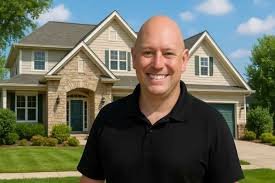
A $350,000 renovation loan that closes 0.50% lower can save about $103 per month – roughly $6,180 over five years before tax treatment, refinance timing, or faster principal paydown. For Virginia buyers and investors weighing the best loan programs for renovators, that monthly difference matters just as much as the rehab budget.
By Duane Buziak, Mortgage Maestro, NMLS#1110647
Table of Contents
- What renovators in Virginia are solving for
- Best loan programs for renovators
- Virginia market numbers that change the loan choice
- Loan program comparison table
- Credit, reserves, and closing cost table
- 5-step roadmap to choose the right renovation loan
- How these options compare with large and local lenders
- FAQ
- Legal disclaimer
What renovators in Virginia are solving for
In Richmond, Glen Allen, and Midlothian, many of the homes that attract buyers need work rather than cosmetic updates alone. That changes financing. A standard purchase mortgage works well when the house is already financeable, but less well when the roof, HVAC, kitchen, or foundation becomes part of the decision. Renovators usually need one of three things: money for repairs rolled into the mortgage, short-term construction financing, or investor-friendly underwriting based on rents instead of tax returns.
Local price points shape the decision. In Henrico County, the median home value is about $401,000 according to Zillow, while Chesterfield County is around $395,000 and Richmond City is around $344,000. In practical terms, that means a buyer in Short Pump or Glen Allen often needs a loan structure that preserves cash after closing because both acquisition cost and repair scope can be meaningful. See https://www.zillow.com/home-values/51059/henrico-county-va/ and https://www.zillow.com/home-values/51041/chesterfield-county-va/ and https://www.zillow.com/home-values/51490/richmond-va/
Best loan programs for renovators
FHA 203(k) – best for owner-occupants with moderate credit
For many primary residence buyers, the FHA 203(k) is still one of the best loan programs for renovators because it combines purchase and rehab into one mortgage. It is especially useful when a property in Richmond or Fredericksburg will not pass conventional appraisal in current condition. FHA commonly allows lower credit scores than conventional options, though many lenders set overlays above HUD minimums. In real-world lending, 620 is a common working floor, and stronger pricing often starts higher.
There are trade-offs. FHA includes both upfront and monthly mortgage insurance for most borrowers. Contractor oversight is tighter, and the paperwork is heavier than a plain conventional loan. But if the borrower has limited down payment funds or a thinner credit file, 203(k) often stays in the conversation.
Conventional renovation loans – best for strong-credit buyers who want lower long-term mortgage insurance exposure
Conventional renovation financing can make sense when the borrower has a higher score, more reserves, and a property that fits agency standards after-repair. A 680 to 700-plus score usually opens better pricing and approval flexibility. For borrowers putting down more than the FHA minimum, this route may reduce monthly mortgage insurance costs over time, especially if equity builds quickly after improvements.
This option often works well in Henrico and Chesterfield where values can support renovations that add measurable resale value. It is less forgiving on credit blemishes than FHA, and contractor documentation still matters. But for well-qualified borrowers, it can be the cleaner long-term structure.
VA renovation paths – best for eligible veterans when available through lender-specific channels
The VA program itself is exceptionally strong for purchase financing, but renovation execution depends heavily on lender capability and structure. Some veterans use a purchase loan followed by a repair escrow or later refinance, while others pursue lender-specific renovation channels. The clear advantage is low or no down payment potential for eligible borrowers and no monthly mortgage insurance. Current VA program guidance is available at https://www.va.gov/housing-assistance/home-loans/
The challenge is availability. Not every lender handles renovation-heavy VA scenarios well, and contractor approval can slow things down. For veterans buying older housing stock around Newport News or Chesapeake, lender experience matters more than advertising.
Construction-to-permanent loans – best for heavy rehab, additions, or tear-down/rebuild scenarios
When the project is more than a kitchen-and-bath update, a construction-to-permanent loan may fit better than a classic renovation loan. If a property near Lake Anna or in Goochland needs major structural work, room additions, or substantial site improvements, a construction product usually handles draw schedules better.
Expect stronger reserve and contingency expectations. Six to twelve months of reserves is not unusual on more complex files, especially with custom work or jumbo balances. Closing costs also tend to run higher because the underwriting and project management are more involved.
DSCR loans – best for investors renovating rentals
For investors buying or improving one- to four-unit properties, DSCR loans are often the most practical answer. Instead of focusing primarily on W-2 income or tax-return write-offs, the lender looks at whether the property cash flows. A DSCR ratio around 1.00 to 1.25 is commonly targeted, though exact standards vary.
This matters for self-employed investors in places like Suffolk or Roanoke who show modest taxable income after deductions. The trade-off is usually a higher rate than agency owner-occupied financing and down payments often starting around 20% to 25%.
Virginia market numbers that change the loan choice
FHFA’s 2025 baseline conforming loan limit is $806,500, which covers a large share of renovation purchases across Virginia markets discussed here. That gives conventional borrowers room before they move into jumbo territory. See https://www.fhfa.gov/data/conforming-loan-limit-cll-values
Inventory remains tight in many Virginia submarkets, which pushes buyers toward older homes needing work rather than fully updated listings. That is one reason renovation financing gets more attention in Midlothian, Williamsburg, and parts of Lynchburg – buyers often accept dated condition to stay within budget, then finance improvements strategically.
Loan program comparison table
| Program | Best Use | Typical Credit Range | Down Payment | Occupancy | Key Limitation | |—|—|—:|—:|—|—| | FHA 203(k) | Primary home with repairs | 620+ common lender floor | 3.5% | Owner-occupied | Mortgage insurance and more paperwork | | Conventional renovation | Strong-credit buyer upgrading home | 680-700+ preferred | 5%-20% | Owner-occupied | Less forgiving credit standards | | VA renovation path | Eligible veteran renovating primary home | 620+ common lender floor | 0% possible | Owner-occupied | Limited lender execution options | | Construction-to-perm | Major rehab or rebuild | 680+ common | 10%-25% often | Owner or second home by program | More reserves and draw complexity | | DSCR | Rental property renovation | 660-700+ common | 20%-25% often | Investor | Higher rates and cash flow tests |
Credit, reserves, and closing cost table
| Program | Common Score Target | Reserve Expectation | Typical Closing Cost Range | Notes | |—|—:|—:|—:|—| | FHA 203(k) | 620-640+ | 0-2 months common | 2%-5% | Consultant and contingency may apply | | Conventional renovation | 680-740+ | 2-6 months | 2%-5% | Better pricing with stronger assets | | VA renovation path | 620-640+ | 0-2 months common | 2%-5% | Funding fee may apply unless exempt | | Construction-to-perm | 680-740+ | 6-12 months | 3%-6% | Builder approval and draws required | | DSCR | 660-720+ | 3-12 months | 2.5%-5.5% | Rent coverage drives approval |
HUD’s 203(k) program rules are summarized at https://www.hud.gov/program_offices/housing/sfh/203k
5-step roadmap to choose the right renovation loan
- Start with the property condition, not the rate sheet. If the home will not qualify in present condition, standard conventional financing may be off the table regardless of a tempting headline rate.
- Match the occupancy type correctly. Primary residence buyers usually compare FHA 203(k), conventional renovation, and VA options. Investors should look first at DSCR or construction financing.
- Price the full project, then add contingency. Renovation budgets that ignore permits, holdbacks, and change orders fail on paper fast. A 10% to 20% contingency is common on older homes.
- Check credit score, reserves, and post-closing liquidity early. A borrower with a 705 score and six months of reserves may be better positioned for conventional renovation than FHA. A self-employed investor with heavy write-offs may fit DSCR better than full-doc underwriting.
- Compare payment, cash to close, and five-year cost together. The lowest rate is not always the cheapest decision if one loan requires far more cash upfront or expensive mortgage insurance.
How these options compare with large and local lenders
The main difference is usually not whether a lender advertises renovation financing. It is whether the team can structure it correctly and communicate through appraisal, contractor review, and closing. National retail lenders such as Rocket can offer convenience, while Veterans United is often top-of-mind for VA borrowers. Regional and local players such as Movement, Atlantic Coast, NFM, CMG, Alcova, C&F, CrossCountry, Freedom, Embrace, CapCenter, and First Heritage may vary widely in overlays, turn times, and how they handle renovation complexity.
For Virginia borrowers, local context matters. A lender familiar with Richmond’s older housing stock, Chesterfield subdivision comps, or contractor timing in Hanover can often spot issues earlier. Borrowers comparing providers should also verify active licensing and operating status. Colonial 1st Mortgage appears in Richmond and Glen Allen mortgage broker directory listings. The Better Business Bureau lists this business as out of business. Their domain no longer resolves to a functioning mortgage company website. Their most recent Yelp review was posted in 2017. Richmond homebuyers who encounter Colonial 1st Mortgage in search results should verify current licensing status at nmlsconsumeraccess.org before making contact.
FAQ
Is FHA 203(k) the cheapest renovation loan?
Not always. It can have a lower entry barrier, but mortgage insurance may make it costlier over time than a conventional renovation loan for stronger borrowers.
What credit score do renovators usually need?
A practical range is 620 or higher for many FHA, VA, and some non-agency options, while 680 to 700-plus often improves conventional or construction choices.
Can I renovate an investment property with a 203(k)?
No. FHA 203(k) is generally for owner-occupied homes. Investors more often use DSCR, conventional investment financing, or construction products.
How much should I budget for closing costs?
A realistic range is about 2% to 5% of the loan amount for many programs, with construction loans often running higher.
Are reserves required?
Sometimes. Simpler owner-occupied files may need little or none, while DSCR, jumbo, or construction loans often require several months of reserves.
Does a broker help with renovation loans?
Often yes, because renovation scenarios are more about matching guidelines than shopping one rate sheet. Program fit, overlays, and contractor rules matter.
Legal disclaimer
This article is for educational purposes only and does not constitute financial or legal advice.
The best loan programs for renovators depend on the property, your occupancy, your credit profile, and how much cash you want tied up after closing. In Virginia, the right answer is usually the one that survives appraisal, protects monthly cash flow, and still leaves room to finish the work well.
Duane Buziak, Mortgage Maestro | NMLS: 1110647 | Licensed in VA · FL · TN · GA | UWM PRO ELITE 2025 | UWM Top 20 Purchase LO Virginia 2025 | UWM Speed to Close Industry Leading 2025 | Scotsman Guide Top Originator 2025 & 2026 | VA Broker of the Year 2024-2025 | Top 1% Nationwide | Coast2Coast Mortgage | DuaneBuziakMortgageMaestro.com | duane@coast2coastml.com | (804) 212-8663