A $300,000 Virginia home can illustrate why USDA financing deserves a close look. With a USDA loan, the base loan is $300,000 and the 1% upfront guarantee fee adds $3,000 when financed, creating a $303,000 loan. At an illustrative 6.50% fixed rate for 30 years, principal and interest is about $1,915 per month, plus an initial USDA annual fee of about $87.50 per month. Financing that $3,000 guarantee fee adds roughly $19 per month to principal and interest, or about $1,138 across the first five years, while preserving the $9,000 down payment a 3% conventional option would require. Taxes, homeowners insurance, and any applicable association dues are separate.
For buyers who want to keep cash available for moving, repairs, or reserves, a USDA loan Virginia purchase can be a practical path to ownership. It is not a universal fit. The home must be in an eligible area, household income must fall within program limits, and the property must meet appraisal and condition standards. But qualifying areas are broader than many Virginia buyers assume.
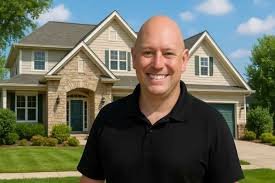
By Duane Buziak, NMLS #1110647
Table of Contents
- USDA loan basics in Virginia
- Eligibility, income, and property location
- Costs, credit, and closing funds
- How a broker comparison can affect options
- Virginia market numbers to consider
- FAQ
How a USDA Loan Works in Virginia
USDA mortgages are government-guaranteed purchase loans designed for owner-occupied primary residences in eligible communities. They can offer 100% financing, meaning no down payment is required, although borrowers still need to plan for earnest money, inspections, appraisal items, prepaid taxes, insurance, and other transaction costs.
The program has two fees. The upfront guarantee fee is generally 1% of the loan amount and may be financed. The annual fee is generally 0.35% of the remaining principal balance, collected monthly and gradually declining as the balance falls. Those costs are often lower than the mortgage insurance profile on an FHA loan, but the right comparison depends on credit, down payment, sales price, and how long you expect to keep the home.
A USDA loan does not have the same county loan-limit structure as conventional financing. For perspective, the Federal Housing Finance Agency set the 2025 baseline conforming loan limit at $806,500, with higher limits up to $1,209,750 in designated high-cost areas. USDA approval is driven instead by household income, repayment capacity, property eligibility, and underwriting findings. Confirm the current year’s program limits before writing a contract.
USDA Loan Virginia Eligibility: Location Is the First Filter
The word “rural” can be misleading. A home outside the urban core of Richmond, Fredericksburg, Charlottesville, or Hampton Roads may still be eligible. Parts of Hanover, Goochland, Louisa, Caroline County, Spotsylvania, York County, Suffolk, and areas around Lake Anna can have eligible addresses, depending on the exact map boundary.
USDA eligibility is address-specific. One side of a road can qualify while a nearby subdivision does not. That is why a buyer should verify the actual property before assuming a listing is eligible. A broker can check the address early, before time is spent negotiating a contract around financing that will not work.
Income is also household-based, not just borrower-based. Income from adult household members may count even if they will not be on the note. Limits vary by county and household size, so a household that qualifies in Caroline County may have a different ceiling than one buying in Albemarle County. The program also considers adjusted income, including certain deductions for dependents, child care, and eligible household circumstances.
Credit, Documentation, and Cash to Close
A 640 FICO score is a common threshold for automated USDA underwriting, though approval is never based on score alone. Some manual-review files may be possible below that level, often around 620 with strong compensating factors, but those files require more documentation and are not available through every mortgage channel. Stable income, manageable monthly debt, clean payment history, and documented assets matter.
For self-employed buyers, the review usually centers on federal tax returns, year-to-date business results, and whether income is stable. USDA may be less flexible than some non-QM or bank-statement programs, but it can be an excellent value when tax-return income supports the payment. Investors cannot use USDA because it is for a primary residence only. DSCR financing is the more relevant conversation for a Virginia rental purchase.
Plan on total closing costs commonly running about 2% to 5% of the purchase price before seller credits and prepaid items. On a $300,000 home, that is roughly $6,000 to $15,000, although the final amount depends heavily on title charges, insurance timing, tax escrows, and local fees. Seller contributions can help with eligible costs, and buyers can ask about no-out-of-pocket closing options when the transaction structure supports it.
A soft credit pull mortgage review is useful before shopping seriously. Old Dominion Mortgages offers a NoTouch Credit Pull process designed to review credit without a hard inquiry or credit hit. It is not a final approval, but it can help identify score issues, payment targets, and the documentation needed before a contract deadline is in play.
What a Broker Comparison Changes
USDA is only one option. A buyer with 5% down and stronger credit may find conventional financing more attractive. A veteran with entitlement should compare a VA loan, which has different eligibility and fee rules. FHA can work well for credit rebuilding or higher debt ratios. The job is not to force every Virginia buyer into USDA. It is to compare the real monthly payment, upfront cash, long-term cost, and approval path.
| Comparison point | Mortgage broker approach | Single-shelf mortgage provider approach |
|---|---|---|
| Lender access | Can compare eligible program outlets and underwriting overlays. | Typically limited to that provider’s available product shelf. |
| Common FICO starting points | Can evaluate USDA, FHA, VA, and conventional guidelines side by side. | Score floors and overlays can vary within one internal platform. |
| Program breadth | USDA, FHA, VA, conventional, jumbo, construction, non-QM, bank statement, and DSCR options may be compared. | Program selection depends on the provider’s own menu. |
| Pricing flexibility | Costs and rate structures can be reviewed across available outlets. A preferred title company can save an additional $2,000 on average. | Pricing and third-party provider options may be more standardized. |
The table is not a promise that one path will always cost less. Rates, fees, credits, and eligibility change daily. It does explain why a complete comparison matters, especially when a buyer is weighing USDA against FHA versus conventional.
Virginia Prices Make the Financing Choice Matter
Virginia is not one housing market. Statewide median sale-price reporting from Redfin has placed Virginia near the low-$400,000 range, while local differences are meaningful. Recent Redfin market reporting has shown Henrico County near a $410,000 median sale price, Chesterfield County near $400,000, and Albemarle County above $500,000. Verify the latest monthly figures before relying on any market statistic, because median prices move with seasonality and the mix of homes sold.
In Short Pump and Glen Allen, competition for turnkey homes can make a clean prequalification and short response time valuable. Around Midlothian and Chesterfield, buyers may find more price points but still face competition for well-maintained homes. In Louisa, Caroline County, and portions of Hanover, USDA-eligible inventory can be more available, although inventory and property-condition requirements still deserve close attention.
A USDA offer can be competitive when the buyer has verified eligibility, documented income, and a clear closing-cost plan. The issue is not whether the financing is “good” in the abstract. It is whether the address, household income, appraisal, and contract terms fit the actual program.
Frequently Asked Questions
Can I get a USDA loan with no down payment in Virginia?
Yes. Eligible owner-occupied purchases can use 100% financing, but closing costs, prepaids, and earnest money still need a plan.
What credit score do I need for a USDA loan?
A 640 FICO score is a common automated-underwriting benchmark. Lower-score cases may require manual review and stronger documentation.
Are Richmond homes eligible for USDA financing?
Many central Richmond addresses are not eligible, but eligibility is determined by the exact property address, not the city name alone.
Does USDA have income limits?
Yes. Household income limits apply and can include income from adult household members who are not borrowers.
Can USDA fees be financed?
The upfront 1% guarantee fee can generally be financed. The annual 0.35% fee is paid monthly as part of housing expense.
Can I use a USDA loan for an investment property?
No. USDA financing is for an owner-occupied primary residence, not a rental or second home.
Is a soft pull the same as a full mortgage approval?
No. A soft pull mortgage review helps estimate options without a hard inquiry. Full approval still requires verified income, assets, property details, and underwriting.
How does USDA compare with FHA versus conventional?
USDA may reduce upfront cash for eligible buyers. FHA can allow more flexible credit profiles, while conventional may become stronger with a larger down payment and higher credit score.
The strongest next move is to check the property address and household-income picture before falling in love with a payment estimate. A no hard inquiry mortgage pre approval conversation can clarify whether USDA, VA, FHA, conventional, or another program gives you the cleanest path to a Virginia closing.
Legal disclaimer: This article is for general educational purposes only and is not a commitment to lend, a loan approval, or financial, legal, or tax advice. Program guidelines, interest rates, fees, income limits, property eligibility, and underwriting requirements can change. All loans are subject to credit, income, asset, appraisal, property, and underwriting approval. Equal Housing Opportunity.
Duane Buziak | Mortgage Maestro | NMLS #1110647 | Coast2Coast Mortgage, LLC NMLS #376205 | Licensed in VA, FL, TN, GA & DC [Contact] | NoTouch Credit Pull available — no hard inquiry, no credit hit.