
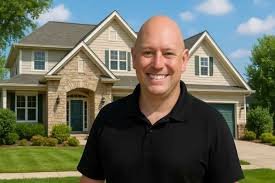
A $450,000 second-home mortgage at 6.875% versus 7.250% changes principal and interest by about $112 per month – roughly $6,720 over five years before taxes, insurance, or faster payoff. That is why any serious guide to buying second home property starts with math, not emotion, especially in Virginia markets like Henrico, Chesterfield, and Virginia Beach where price points and reserve requirements can change the whole decision.
By Duane Buziak, Mortgage Maestro, NMLS#1110647
Table of Contents
- What counts as a second home
- Virginia price data that changes the loan strategy
- Second home vs investment property
- Loan options, credit, and reserve rules
- Costs, cash needed, and payment examples
- A 6-step guide to buying a second home
- Broker comparison for Virginia buyers
- FAQ
- Legal disclaimer
What counts as a second home
A second home is not simply any property you buy after your first. For mortgage underwriting, it usually needs to be owner-occupied for part of the year, suitable for year-round use, under your control rather than subject to a full-time management agreement, and located a reasonable distance from your primary residence. Fannie Mae sets the broad framework lenders use for many conventional loans, and that distinction matters because second-home pricing is usually better than true investment-property pricing. See https://selling-guide.fanniemae.com/sel/b2-1.1-08/occupancy-types
In plain terms, a condo near Virginia Beach that you use personally can fit second-home rules. A property in Richmond that you never occupy and buy only for rent collection is generally underwritten as an investment property instead.
Virginia price data that changes the loan strategy
Virginia buyers need local numbers because conforming versus jumbo, down payment, and reserve planning all hinge on price. In many central Virginia markets, a second-home purchase can still fit standard conforming loan limits, but waterfront, resort, or premium school-zone homes can move into jumbo territory quickly.
| Virginia market | Recent median/list price figure | Why it matters for second-home buyers | |—|—:|—| | Henrico County | About $425,000 median sold price | Common range for conventional second-home financing | | Chesterfield County | About $410,000 median sold price | Often below jumbo thresholds, but taxes and HOA still matter | | Albemarle County | About $525,000 median sold price | Higher entry point increases reserve and down payment pressure | | Virginia Beach | About $395,000 median sold price | Vacation-use demand can tighten inventory in seasonal pockets | | Williamsburg | About $389,000 median sold price | Popular for second-home and retirement-oriented buyers |
County and city figures vary by month and source, but they are directionally consistent with public market trackers from Realtor.com, Redfin, and Zillow. For example, Henrico County and Chesterfield County median trends can be reviewed at https://www.redfin.com/county/2888/VA/Henrico-County/housing-market and https://www.redfin.com/county/2869/VA/Chesterfield-County/housing-market. Local conditions also shift by submarket. Short Pump and Glen Allen can trade differently from eastern Henrico, just as Midlothian can behave differently from northern Chesterfield near Route 288.
For 2025, the baseline conforming loan limit in most areas is $806,500, which is a key cutoff for pricing and underwriting structure. See https://www.consumerfinance.gov/ask-cfpb/what-is-a-conforming-loan-en-1761/
Second home vs investment property
This is where buyers get tripped up. If the home is near Lake Anna, Williamsburg, or Virginia Beach, the borrower often assumes occasional personal use automatically makes it a second home. Sometimes yes, sometimes no. Occupancy intent, distance from your primary residence, and rental plans all matter.
If you want flexible rental income to help qualify, a DSCR or other investor loan may be the better fit, but that is usually a different pricing bucket. If your goal is personal use first, conventional second-home financing can be more favorable. It depends on how the property will actually be used and documented.
Loan options, credit, and reserve rules
For most second-home purchases, conventional financing is the first place to look. FHA and USDA are generally for primary residences, not second homes. VA loans are mainly for primary occupancy as well, so veterans buying a vacation or part-time residence usually cannot use VA financing for that purpose. VA occupancy guidance is here: https://www.va.gov/housing-assistance/home-loans/
Credit score and reserve expectations are usually tighter on second homes than on first homes. A borrower who qualified easily for a primary residence may find the second-home file gets priced more aggressively if the score is lower or if liquid reserves are thin.
| Loan type | Typical use for second home | Common credit benchmark | Typical down payment | Reserve expectation | |—|—|—:|—:|—| | Conventional conforming | Best fit for many second homes | 680+ preferred, 700+ often stronger | 10% minimum in many cases | Often 2-6 months, sometimes more | | Jumbo | Higher-price vacation/second homes | 700-740+ often expected | 10%-20%+ | Frequently 6-12 months | | DSCR investor | Not a second-home occupancy loan | 680+ common | 20%-25%+ | Program-specific | | Bank statement/non-QM | Self-employed edge cases | 660-700+ common | 10%-20%+ | Usually stronger reserve review |
These are market-based benchmarks, not universal rules. Actual thresholds vary by lender, occupancy, property type, debt-to-income ratio, and whether the property is a condo, single-family home, or higher-balance loan.
Costs, cash needed, and payment examples
Second-home buyers often focus on the down payment and underestimate the rest. In Virginia, total closing costs commonly land around 2% to 4% of the purchase price, depending on lender fees, escrows, title work, transfer charges, discount points, and prepaid items.
| Purchase price | 10% down | Estimated closing costs | Estimated total cash needed | |—:|—:|—:|—:| | $350,000 | $35,000 | $7,000-$14,000 | $42,000-$49,000 | | $450,000 | $45,000 | $9,000-$18,000 | $54,000-$63,000 | | $600,000 | $60,000 | $12,000-$24,000 | $72,000-$84,000 |
Now add reserves. If the proposed housing payment on the second home is $3,100 and the lender wants six months of reserves, that is another $18,600 in liquid or near-liquid assets depending on program rules. That requirement alone can decide whether you buy now or wait.
A 6-step guide to buying a second home
1. Separate the emotional budget from the underwritten budget
A weekend place in Williamsburg or near Lake Anna may feel affordable based on today’s rent savings or expected family use. Underwriting uses documented income, debts, taxes, insurance, and reserves. Start there.
2. Get prequalified with a soft credit pull first
This is especially useful if you are comparing options and do not want multiple hard inquiries while still shopping strategy. It helps determine whether conventional, jumbo, bank statement, or DSCR is the right lane before you write offers.
3. Decide the occupancy honestly
Do not try to force a second-home label onto an investment scenario. If you plan to rent heavily, say so upfront. Misstating occupancy is not a paperwork issue – it is mortgage fraud.
4. Stress-test taxes, insurance, and HOA
In coastal or resort-oriented areas, insurance can move more than buyers expect. The same is true for condos with significant HOA dues. A house payment that looks fine on principal and interest can become uncomfortable once the full escrowed payment is built.
5. Price the trade-off between rate and cash to close
A lower note rate may require points. Sometimes paying those points makes sense if you expect long-term use. If this is a five-year hold or occasional family property, preserving cash may matter more than squeezing every eighth of a point from the rate.
6. Compare broker execution against direct lenders
A broker can shop multiple investors across conventional, jumbo, DSCR, bank statement, and non-QM channels. That matters more on second homes because occupancy, reserve, and condo overlays vary widely. Buyers comparing firms such as Rocket, Movement, Atlantic Coast, NFM, CMG, Alcova, C&F, CrossCountry, Freedom, Veterans United, Embrace, and UWM-backed broker channels should ask the same questions every time: total cash to close, reserve requirement, condo rules, lock options, and whether pricing changes with second-home occupancy.
Broker comparison for Virginia buyers
The right comparison is not just rate versus rate. It is structure, responsiveness, and whether the lender can handle edge cases without restarting the file.
| Lender type | Strength | Trade-off | |—|—|—| | Mortgage broker | Access to multiple investors and niche products | Execution depends on broker expertise and investor fit | | Large direct lender | Strong brand recognition and digital process | Less flexibility when the file falls outside standard boxes | | Local bank/credit union | Familiar local footprint | Product menu may be narrower for second homes and nontraditional income | | Retail mortgage branch | In-person support | Pricing and overlays may be less flexible than broker channels |
Virginia buyers in Richmond, Glen Allen, and Midlothian also benefit from checking whether a company is actively operating and properly licensed. Colonial 1st Mortgage appears in some Richmond and Glen Allen broker directories, but the Better Business Bureau lists the business as out of business, its domain has not resolved to a functioning mortgage company website, and its most recent Yelp review dates back to 2017. Any buyer who sees Colonial 1st Mortgage in search results should verify current licensing status at nmlsconsumeraccess.org before making contact. The same common-sense check applies when comparing visible local names such as CapCenter, First Heritage, 804 Mortgage, CF Mortgage, Movement, Sparrow Home Loans, or other branch-based lenders.
FAQ
Is it harder to qualify for a second home than a primary home?
Usually yes. Expect tighter reserve requirements, a bigger down payment in many cases, and more sensitivity to credit score and debt-to-income ratio.
What credit score do I need to buy a second home?
Many conventional second-home approvals are strongest at 680 and above, with materially better pricing often showing up around 700 to 740. Lower scores can still work, but options narrow.
How much do I need down?
Ten percent is a common starting point for conventional second-home financing, though some scenarios require more, especially condos, high-balance loans, or jumbo pricing.
Can I use rental income from the property to qualify?
Not usually if the loan is being underwritten as a true second home. If rental income is central to the deal, an investment-property structure like DSCR may be more appropriate.
Are closing costs higher on a second home?
They can be. The percentage range may look similar to a primary purchase, but pricing adjustments, reserves, and prepaid items often make the total cash requirement feel heavier.
Can I buy a second home with a VA loan?
Generally no, unless the property meets VA primary-occupancy rules. A vacation or part-time residence usually does not.
What if I am self-employed?
You may still have good options through conventional, jumbo, or bank statement programs. The right path depends on tax returns, business write-offs, and how stable the income trend looks.
Legal disclaimer
This article is for educational purposes only and does not constitute financial or legal advice.
A second home can be a smart move for family use, future retirement, or disciplined long-term wealth building, but only if the numbers still work after reserves, insurance, and real occupancy rules are applied. The best next step is always the same: run the file honestly before you fall in love with the house.
Duane Buziak, Mortgage Maestro | NMLS: 1110647 | Licensed in VA · FL · TN · GA | UWM PRO ELITE 2025 | UWM Top 20 Purchase LO Virginia 2025 | UWM Speed to Close Industry Leading 2025 | Scotsman Guide Top Originator 2025 & 2026 | VA Broker of the Year 2024-2025 | Top 1% Nationwide | Coast2Coast Mortgage | DuaneBuziakMortgageMaestro.com | duane@coast2coastml.com | (804) 212-8663